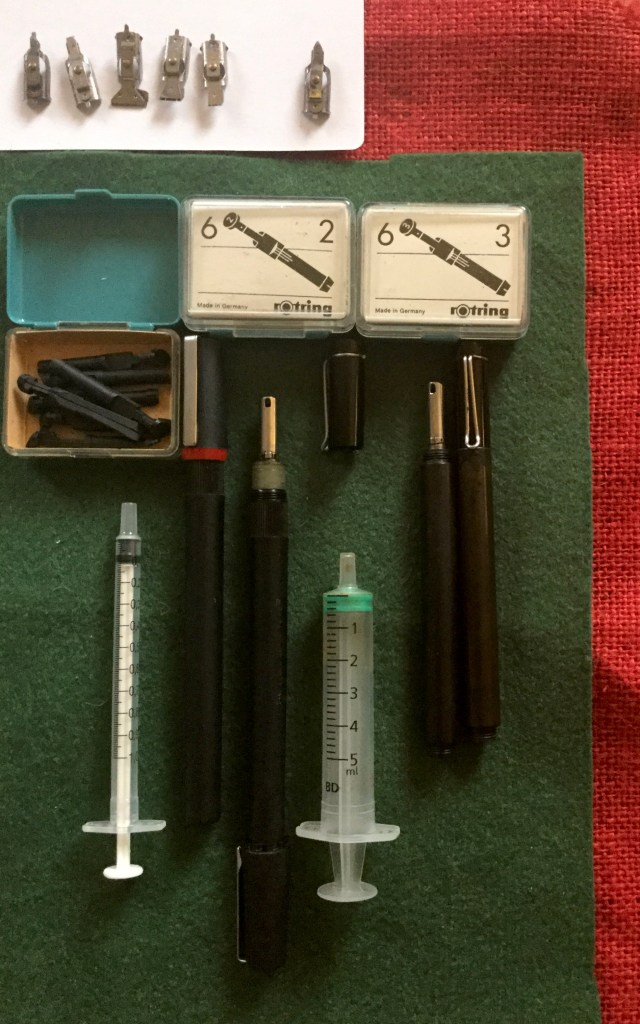

The Rotring and Pelikan Graphos systems are unique. Best looking at internet guidance because there are a few sites out there describing this collection quite deeply. Also a couple of YouTube users too.
Here, having written after filling from a 23ml container of black Rotring ink it was seen to be fairly grey. Old probably. Did shake the container in case separation existed. Whether it is because I have cleaned the stained systems in the Rotring cleaner fluid and followed by water washout due to harsh dry debris being present. This producing a lighter ink due to the need to get the pen unit possibly drier. Filling requires a syringe. Easier to take out the plastic 1, 2 or 3 flow feeds and syringe into the reservoir. About 1 ml is all I used. A messy business if it spills all over your fingers and hands.
You can use syringe and needle to put ink through the small round window/porthole on the underside of the metal tube too. But it isn’t easy. The plastic flow system lay there as a small inherent positional barrier for easy access. The plastic flow insert is fairly easy to remove. A bit of resistance but not too problematic.
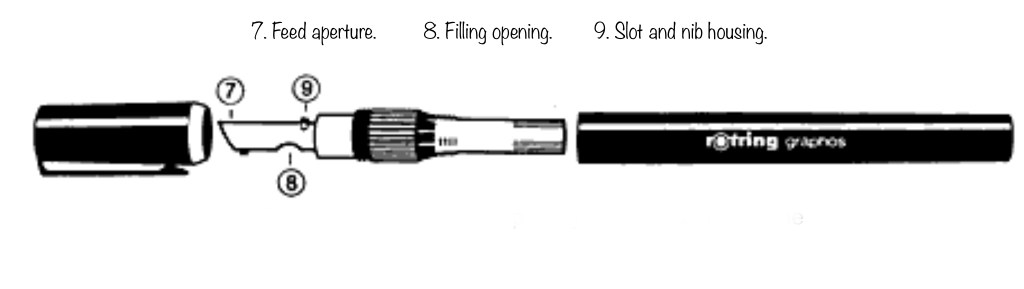
This link is a fantastic explanation site.
https://www.pelikan-collectibles.com/en/Pelikan/Models/Drawing-pen/index.html
Also interesting here too.
http://hans.presto.tripod.com/scan/graphos.html
Both the Rotring and Pelikan use exactly the same nibs, attachments and filling systems it would appear. The reservoirs and pen designs differ. The Pelikan is smaller and has a screw thread at the base of the barrel to attach the pen cap onto. The Rotring is a push on technique.
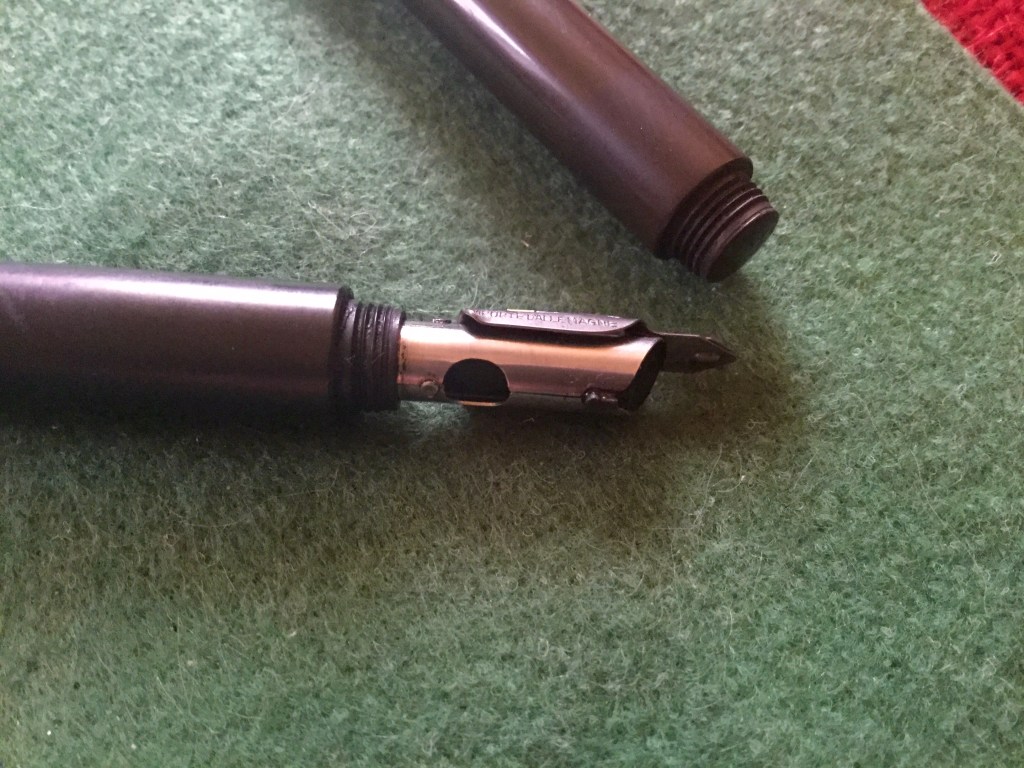
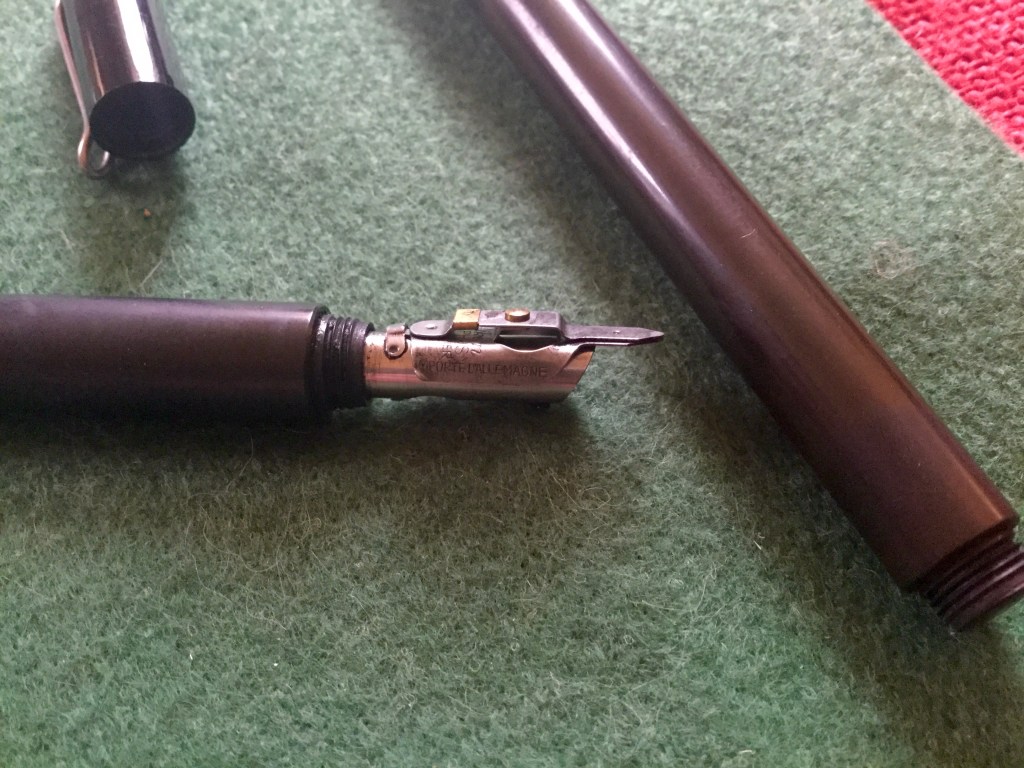
Nibs are very easy to interchange. They simply have to sit on top of the metal feed aperture barrel. A small metal tab houses inside the ‘nib housing’. Secure, yet easy to pull out of site when needed.
The ‘A’ nib collection I have here is a strange experience when putting nib to paper. The nibs are a double ‘skin’ where top upper piece can rotate out of the way of the bottom nib plate in order to clean thoroughly. Needed because the inks are rather akin to the dryness of India inks.
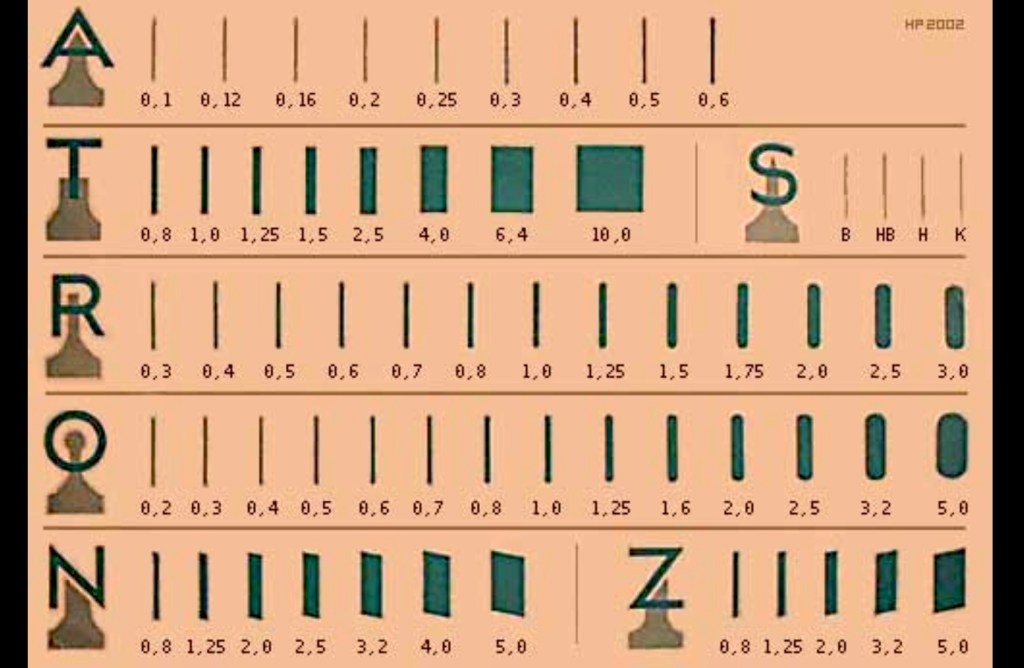
A description on line states ‘pigment ink ideal for archival use’. Available in red, blue, black and white colours. Using the ‘A’ system requires writing on the nibs side and different sizes produce line thinness/thickness.
You can alter the angle for greater production onto the paper. Although producing thicker to thinner lines it shows a greyer tone.
The ink comes out of the gap between the two layers. And at the tip, uniformity works well.
Strange to deliver to paper without scratch and catch though. Basically because it’s currently alien to my response when pen is applied to paper.
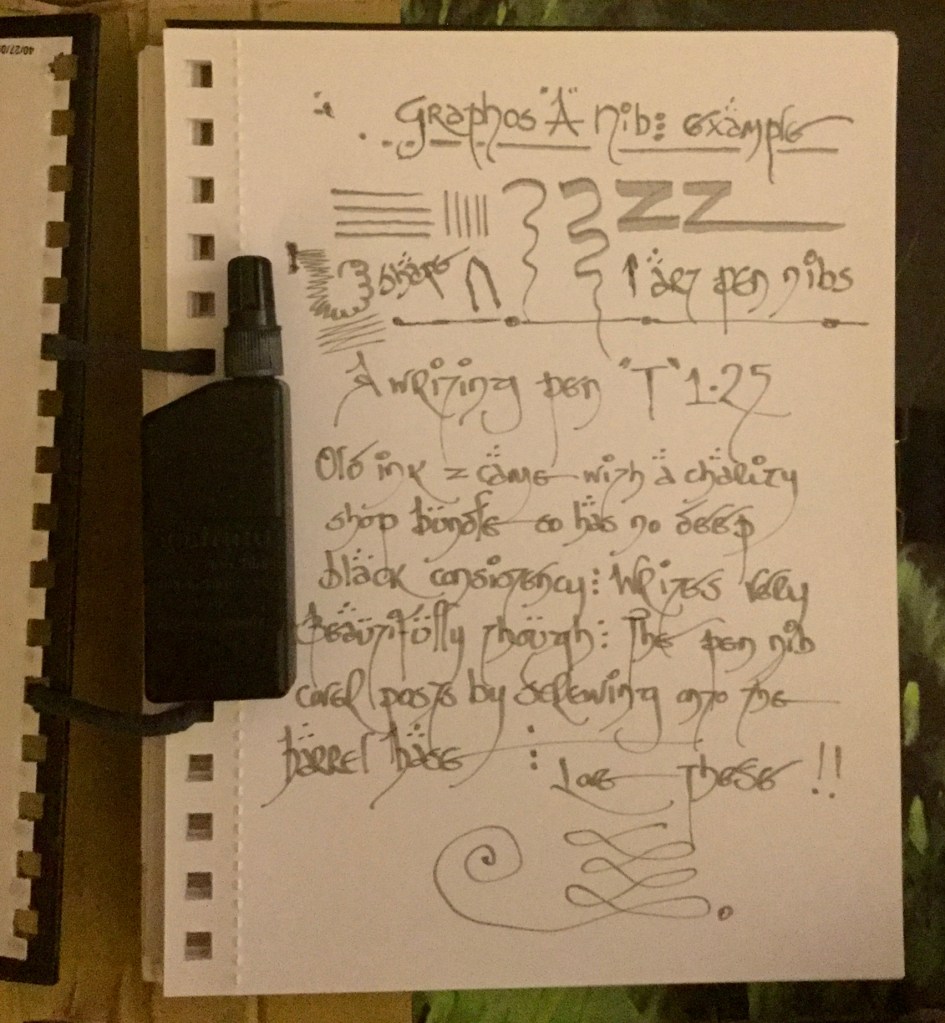
The ‘T’ nibs are more akin to italic nibs and write beautifully. They simply glide. A variety of widths means either simple correspondence letters, thoughts, lyrics, poems and journal writing can be achieved. Also, larger width italics are useful for title headings written and photographed for stills in the form of photographs and information inserts with podcast or video recording edits.
The podcast chats of one to one conversations talking through interests newly found or already inherent and known for keeping well being in tune during the pandemic year/plus need added quirky and interesting imagery. A plan for ink and pen written titles, old typewriter lettering usage for a few descriptive sentence lines, printing blocks of ethnic designs to enhance the ambience and naïve artwork linked to subjects spoken about.
There is also an ink analysis here below.
https://www.parkablogs.com/content/review-rotring-drawing-black-ink-250ml-and-23ml
All in all it is a completely different technique to fountain and dip nib pens using these ‘A’ nibs. A need to practice and develop how to put them to paper successfully. A closer format to fountain pen use with the ‘T’ nibs but with a pigment ink akin to India/China inks. Rotring and Pelikan Graphos are very interesting to work with. 100% looking forward to see if controlling them, especially the ‘A’ nib, will produce different unique journeys using pens and inks.



 Gray Summers
Hallo. I have owned and used Graphos nibs since 1969. They are technical nibs for line work. The T nibs can be used for writing but only the nibs up to 0.8. Any bigger and they are too wet. The A nibs cannot be used for writing. The best nibs for writing are the O nibs. The 0.8 O nib is similar to a Pelikan M200 M nib, though a little wetter. It is possible to write with N nibs but not that easily.
I generally write with Pelikan fountain pens and leave the Graphos for their original intention.
Best wishes
LikeLiked by 1 person
Thank you so much for this insightful reply. I bought the nibs and pen housings, very cheaply, from a Charity Shop and wrote the blog with an enthusiastic mind of how fantastic it was to use them. As a non-technician myself, it is really interesting to read your valuable extension to how you understand their uses.
I unfortunately haven’t pursued looking for more of the nib options due to expense in acquiring them. But would love to try the whole range of choices for use sometime in the future. When a youngster, I thought it would be a fine pursuit to become a draughtsman. But I hadn’t the artistic skill. So, with a love of writing and with freedom in script for script’s sake, I tend to enjoy the explorations of all experimental possibilities. Your comment here is a valuable addition to the blog theme. A huge thank you. Cheers and all the best Egdir.
LikeLike