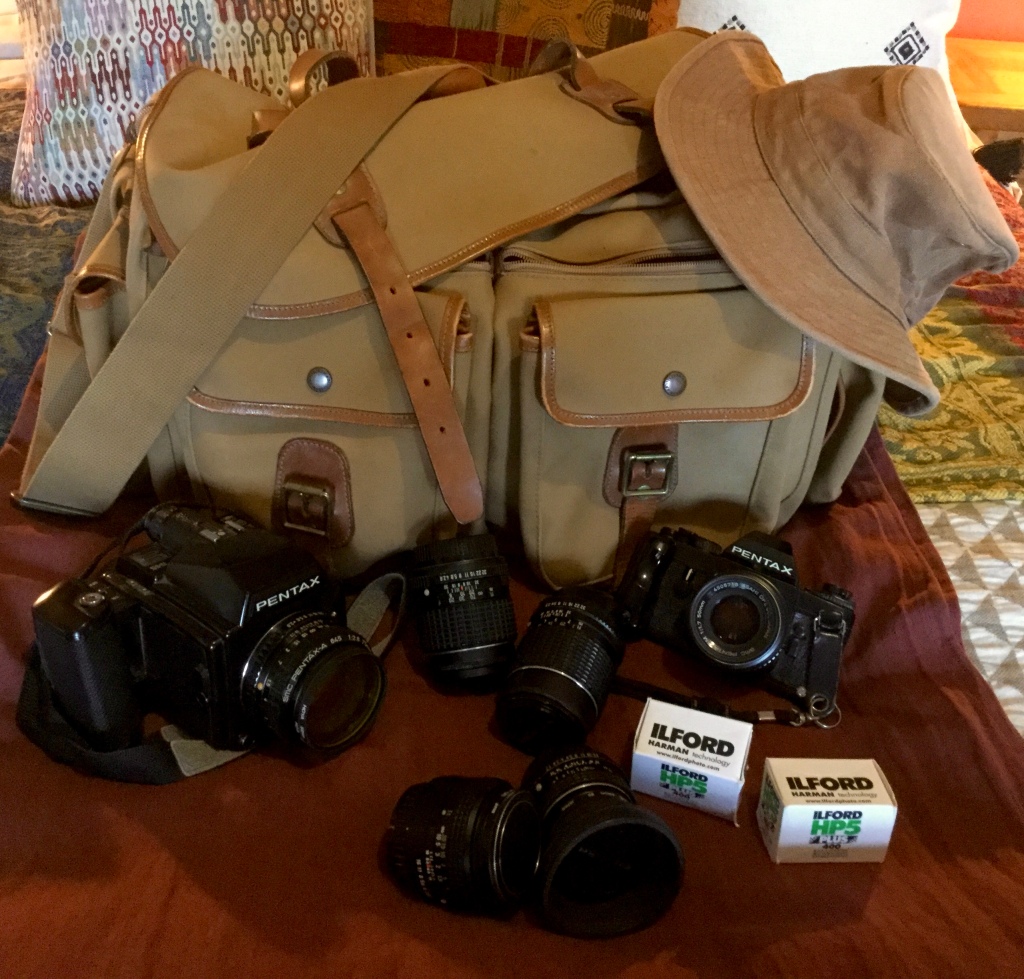
A latent image on photographic film is an invisible image produced by the exposure of the film to light. When the film is developed, the area that was exposed darkens and forms a visible image. In the early days of photography, the nature of the invisible change in the silver halide crystals of the film’s emulsion coating was unknown, so the image was said to be “latent” until the film was treated with photographic developer.
Having taken a photograph using film, the latent image that exists before development is truly a mystical entity. Everyone has a photograph that has taken them completely by surprise once developed. This experience, having witness some of the results you never realised came out so well, are the ‘Treasure Trove’ of a few gems. The ones that have taken the breath away.
The Shock of Latent Imagery Non-Imagined.
I remember starting a group on the photography site called Flickr. The group was named after that very concept of experiencing ‘The Shock’. Photographers joined in their dozens and eventually I had to put limits on the numbers individual photographers put onto the group site. I have maybe a dozen photographs out of hundreds I have taken that have made me say to myself ‘WOW! Did all right there Summers!’ The ones that made you believe that you could capture that certain one that you didn’t know you had in you. But others would put dozens upon dozens of their photographs on the site within days of each other. I suppose they were proud of their work in totality. Nothing wrong with that. But the romantic notion I had in mind was for those photographs that simply stood apart. Like iconic photographs from the past well known photographers who captured those few images that everyone knows them for taking.
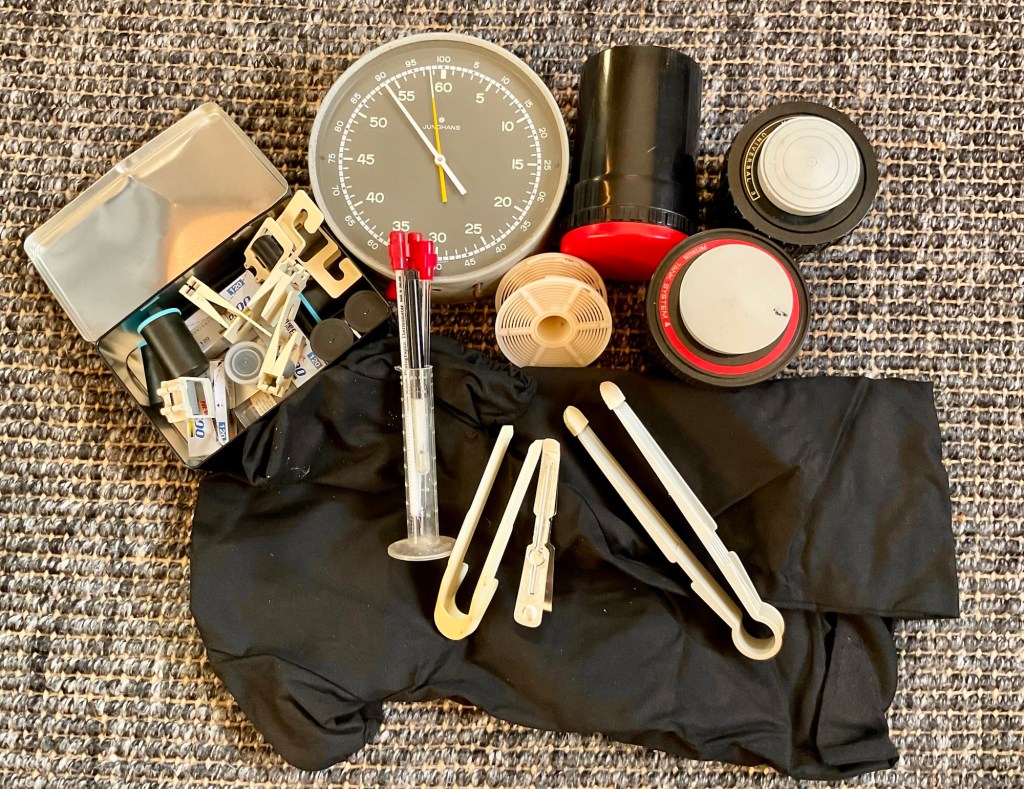
And so, with trepidation, I really am keen to go on that excursion again. Trying to capture ‘The Shock’ images that can be included to fit alongside the Frail Autumn music project. A theme of taking a dozen photographs that can be linked to each song title theme.
When a darkroom existed out at the back of my house, I had a little workshop converted into a darkroom. The workshop was four sides of really thick stone/slate built walls. Two held the garden back. One separated the workshop next door to its left. The fourth had an entrance in it from the back room below.

In the workshop was a sink with a single cold water supply. It was ideal. What my eco minded ethos was challenged with was using chemicals for developing the film and subsequent photograph prints. To be honest, we had a darkroom in the social services centre where I worked at the time. I could also access the Art Centre darkroom too. So most of my printed results were produced in those two places. But I did develop my film negatives in my workshop. And printed my favourite photographs on a really old 1930s Wetzler enlarger with an Ernst Leitz lens. The marriage of the vintage enlarger ambience alongside vintage single grade papers I found in a reclamation centre, produced beautiful prints. Ethereal somehow. I took many photographs of people with learning difficulties and they stay under the umbrella of confidentiality. So will never print them again. But they were printed in the social services darkroom for the people themselves and their families. They also got involved in the production of taking and creating finished results of their own photographs too.
I have read about certain photographers also seeking eco friendly choices from the major producers of developer, stop, fix products too. Interestingly, I would try them after some research. But if natural alternatives produced quirky and ethereal results, that would be far more interesting for myself to add some ‘artistry’ to the project. As yet, no idea exists as to what aesthetics, themes, achievements, etc. I am looking for. All is in its infancy.
But the germ of an idea ‘developing’ is that, by using plant/herb based developers alongside seawater as a negative fixing agent, a philosophical link to ‘Frail Autumn’ as a nature theme could all marry very well. Photographs of an artistic visual result that could sit well in a CD booklet of song lyrics with photograph images alongside.

And so. As no darkroom exists in the workshop anymore, I can now focus upon a more realistic plan of developing the film negatives only. No further need to have a darkroom need. There are now intentions to scan the negatives into a laptop by use of a negative scanner. This will allow images to be easily transferred to the places they can be relevant to. Video, printer, WordPress blogs, the covers of my music on CD and other, as yet unknown, places.
Developing negatives can be achieved with products like coffee, washing soda, vitamin C powder, and other sources that nature provides. I saw a programme once of a female photographer using seaweed. I should imagine use of certain sourced natural products will produce extremely strange results. Ambience that could be strangely beautiful, but currently hiding behind my lack of knowledge. You could say The Shock of Latency Imagery Non-Imagined awaiting in the unknown mystical world again!
OF COURSE, IT WILL BE ONGOING WITH CATCH UPS AND HOW THE JOURNEY WILL CONTINUE ON THIS BLOG THEME. IT WILL BE INTERESTING TO START LOOKING FOR CLUES OF HOW TO PROGRESS.
Some links to interesting sites regarding film negatives developing with natural products.
https://www.instructables.com/Develop-Film-and-Photopaper-With-Household-Chemica/
 Gray Summers
I love that wall! Is it ‘earthen’? WOW! I could really get an idea from your description about the garden too. I can’t speak to anything ‘photography’ as I have never developed film into photographs before. But you make the process look interesting (and difficult).
Great post, as always, Gray!
LikeLiked by 1 person
Thank you. The wall is slate and stone Sheila. All the walls that are the ‘boundary’ walls and surround the garden show the stone/slate composition. Moss and lichen in cracks and crevices make it really earthy, but not earthen. 😊
Photography using film is difficult if you are involved start to finish. So much to learn and can be expensive too. Luckily I have most equipment now. A negative film scanner I purchased from a charity shop was only £10. It has good reviews but is obviously not top grade status. But I am not doing exhibition quality prints, so it should be okay. Be great to include a photo to put alongside each of the songs. The lyrical content can pinpoint subject matter too. Make up an interesting CD lyrics insert folder. So thinking cap on now. Cheers Sheila.
LikeLiked by 1 person
Ah, great to know about the walls, Gray. And that your thinking cap is on. (Smiling)
LikeLike
Just bought a digital download book on Ecological Photo Chemistry. Printed it off now. It gives advice and ‘recipes’ regarding many developer possibilities. Stop and fixers too. A negative has three stages Sheila. Develop the image, stop the developer once the image is where you want it, then fix the silver halide crystals to avoid the negative continuing to lighten if light hits it. Means a light negative prints out as a dark positive. So still lots to learn. I bet you’re bamboozled now Sheila…….😊
LikeLiked by 1 person
Haha! Yes, Gray, I am! Haha! It’s all over my head!
LikeLike
With your enquiring mind………. Who knows what the future holds. You’ll be making seaweed or plant based film developers before you know it! 😊 Cheers Sheila.
LikeLiked by 1 person
Have you decided how you will fix your black and white film?
LikeLiked by 1 person
Hello Steven. No I haven’t yet really researched any of the stages in depth. It has been a bit hectic with pre Christmas build up, so can relax after that. Also have been quite busy with my daughter’s house move for a number of weeks. I know some sort of acidic agent is considered for the stop stage. But never found a fix recipe when I looked a while back. Hoping there is an answer. Or I will have to really look closely at interactions with the other stages if I use a standard fix chemical I suppose.
Have found the bulk loaders as you can see on the photographs. So will properly enquire re: prices. I have seen rolls of both out of date and new on the internet and eBay. Some are not too bad price wise. With two loaders I can load a 400 and also a choice of 100 or 200. My preference was always 400 as I love grain. Fingers crossed it all works. Cheers Steven.
LikeLiked by 1 person
I have found a good internet site Steven called The Sustainable Darkroom. I just put a link at the end of the blog. Salt seems to a fixing agent. Only glanced at it as yet. Cheers for asking Steven. It has led me into looking for some answers tonight.
LikeLiked by 1 person
Thank You.
LikeLike
I thought the problem with fixer was the silver content.
LikeLiked by 1 person
Having read a few bits and pieces you are spot on. It seems that there are very many considerations, recipes, complicated processes, etc. to achieve quality and longevity with negative stability. Last night, I bought the digital pdf download of the ‘Back to Basics’ Ecological Photo Chemistry (an Eco Friendly Guide of Recipes basically) from The Sustainable Darkroom site. Also read other internet ideas too. As you say, the fixer can be problematic. Salt concentration has to be really high. I like the idea of using seawater. Got lots of seawater to use about five minutes drive away from the house. Be nice in keeping a link ethically and philosophically with my Dune photographs.
Interestingly. The photographs from the pdf download have a very ‘arty’ type look about them. May be in keeping with the Frail Autumn music project. A booklet in the CD cover design could have an aesthetic ‘vibe’ that works well with the project. Also, developers from plant based sources would marry well with the Autumn themed ideal. Cheers Steven.
LikeLiked by 1 person