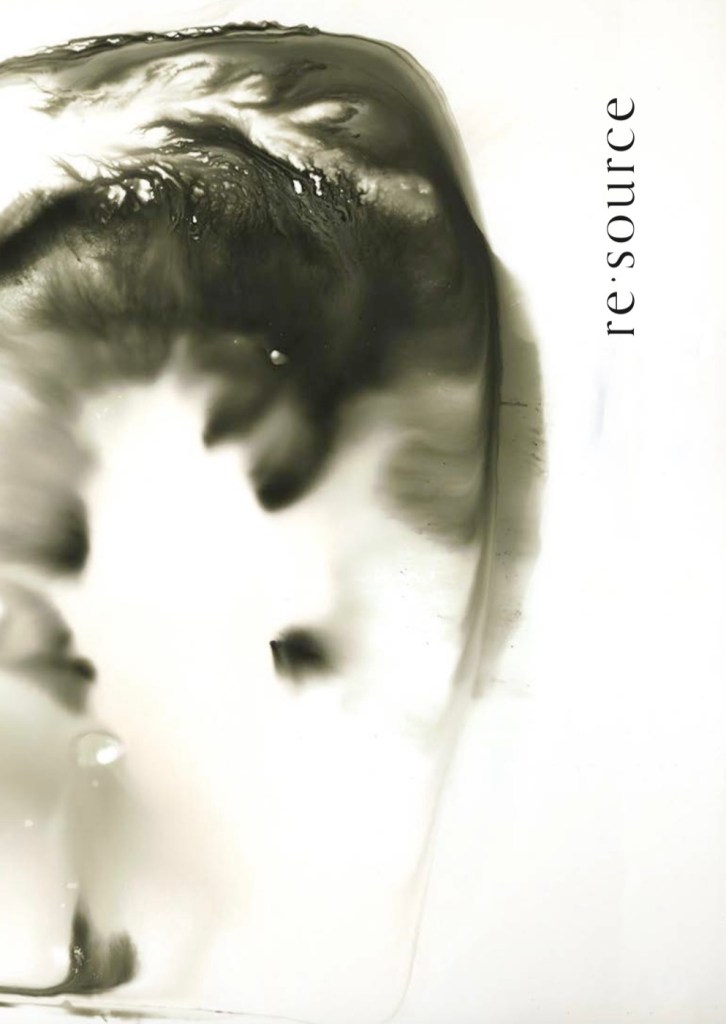
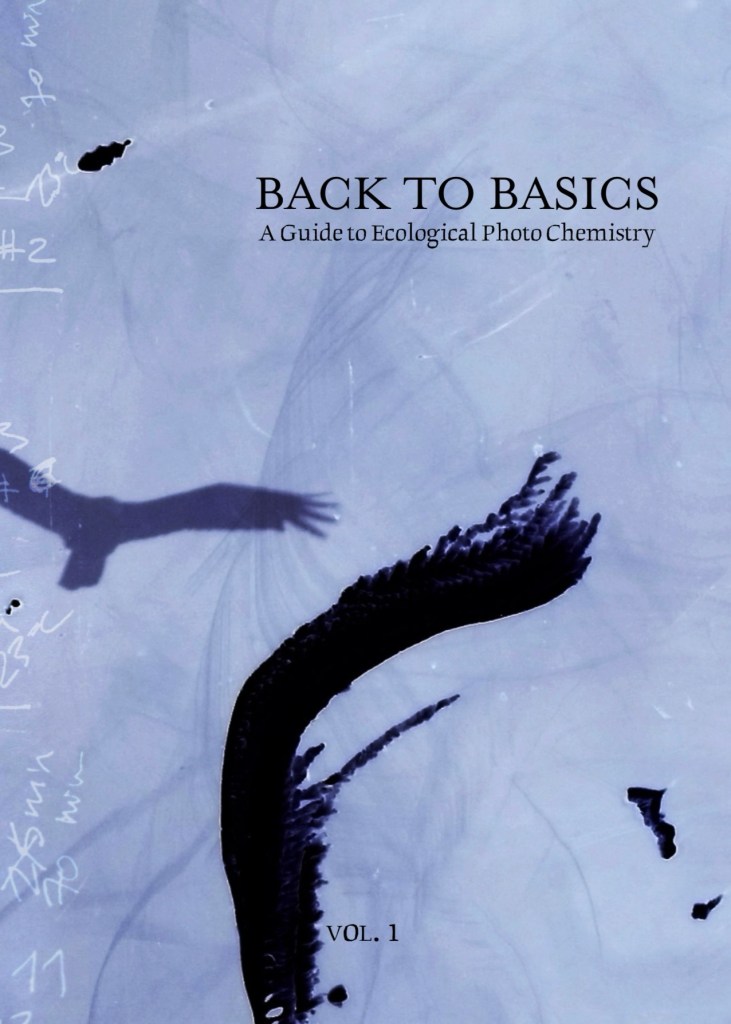
Yesterday’s blog had links to the internet site ‘The Sustainable Darkroom’. The books they sell can either be digitally downloaded in PDF format or bought as a hard paper copy which is posted to your address.
I bought the two books above by choosing the download option. The decision to either read content on the iPad file or print the pages was then my choice. However, I do like printing hard copies to scribble ideas onto. A bit like Harry Potter’s discovery of The Half-Blood Prince’s book of spells. Mind you, I do not believe I could ever improve the recipes. But I may find simpler adages to consider that suit my naiveties. Writing on printed literature was born from nursing days of studying and highlighting thoughts on specific seminal literature papers.
So having printed the first ‘Back to Basics’ PDF, I spent an age printing the larger ‘re.source’ book. Probably not so eco friendly printing as it should be. Rural living has slow WiFi signals. And it is very blustery outside. I imagine those signals having an air dance party amongst themselves before becoming exhausted and finally visiting the Summers’ abode. So what the carbon footprint was I dread to think. Very poor on my part really.
Both (finally!) book downloads are now little printed treasures of information concerning this new journey being undertaken into the tasks of developing both photographic negative film and photography paper visual prints with considerations towards using methods regarding a natural eco friendly develop/stop/fix/print onto paper outcome. Prints in hard copy could well be reconsidered and scanned film negatives into a computer programme much more the logical ideal. I can’t build a darkroom from scratch in the small workshop again. And certainly no ad hoc bathroom one as an alternative either.
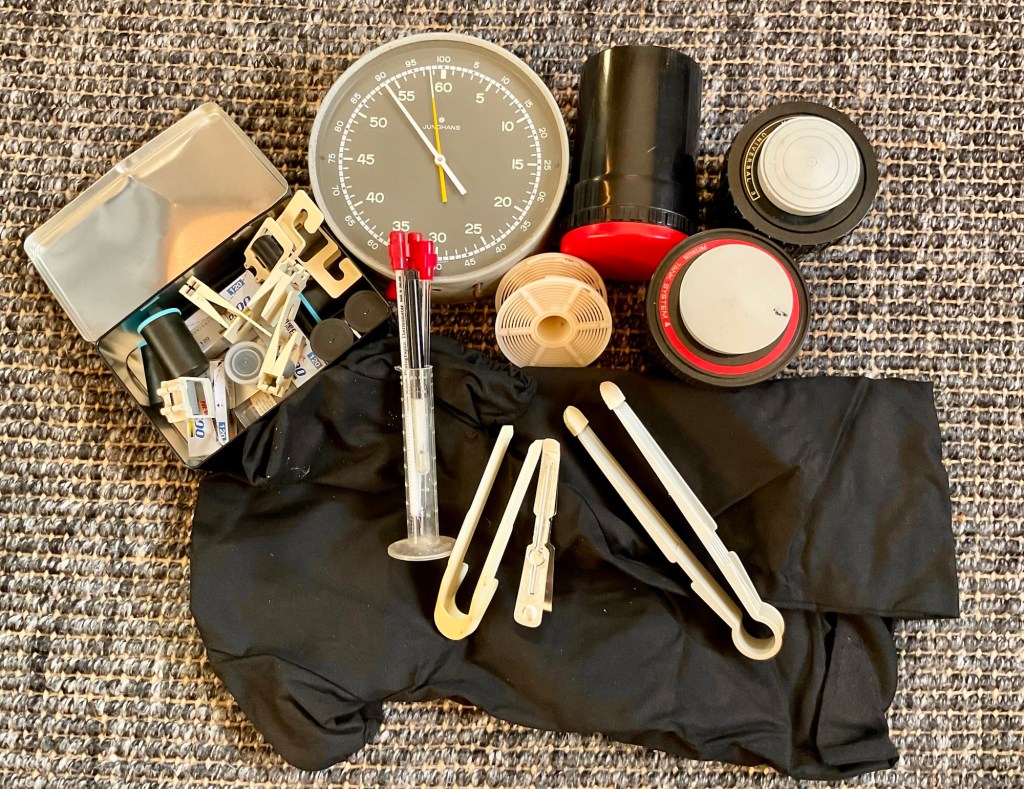
Film developing can be performed without darkroom need though. I have a darkroom ‘bag’. You place everything needed inside in the darkness and zip it closed. Two elasticated holes, which you put your arms into to work on film transfer, allows a tight fit around the arms’ circumference. What follows is working by touch, not sight. It takes some getting used to. Break open the roll of film with a bottle top opener and transfer it into a spiral housing. Then put the spiral into the developing canister and screw the top on. Once inside the negative film is then safe from light contamination. Unzip the bag and take out the canister with the film now inside. You can then develop your film with considered purpose whenever you want. Go put the kettle on and make yourself a celebratory cup of coffee for successfully performing a difficult intervention.
Both book downloads are extremely informative. The Back to Basics one (66 pages) gives an honest insight into the realities……
‘I’ve been asked to put on paper a decade of
experiments, readings, tests, research, failures, and
successes in the film lab. It is a challenging task. All
the methods, formulas, and tricks you are about
to read work for me. But now I need to convince
you to embrace these methods, as if they are your
own. Why? Because I’m sure you will make them
work, and love them all the more. Walking at a
slower pace is the key!’
From Andres Pardo. Back to Basics.
The site link below.
https://sustainabledarkroom.com/collections/all
The re.source book (98 A4 pages) is an absolute delight. I have in no way read even a 1% quota of all the content with intent. Just a flick through. It will take weeks to months of focused enquiry and analysis. But even scanning through its pages shows a body of inclusions that simply take you aback. Personal ideologies and practical recipes abound. This is no booklet of simple presented guidance of negative to photograph developing recipes. This is philosophical discussion of an immense nature. Abounding with presentations from many photographers into their explorations to how they produce imagery that challenges the normalities of film production. Along with integrities and philosophical aims to give credence to alternative views on achieving an image outside the darkroom norm. Although, they don’t want to be seen as alternative, but as the new norm.
Both books, having not been read in depth by myself yet, means I have no clue to the vast array of different materials used in the process methods. Nor the commitments needed to get at producing such materials. Without insights into these areas, it is only wise to say that if it is an interesting read you require to seek what it all entails, then I would recommend whole heartedly. If it is to put into practice the suggestions proffered from the books. Then deep research into cost and safety of materials would be prudent. It is what I myself would do.
When a nurse, and autonomous to a large degree, I still had to research the safety and Gold Standard practices for interventions to choose and use on or give to others. Even though they were written down in company policies as the choices to adhere to and use. I suppose I am saying that any undertaking using a vast array of raw materials requires due diligence. Any individual can react differently to what other individuals find safe, due to contraindications, allergies and possibilities of adverse reactions when mixing various materials together.
The photographers in the books have made these recipes and found them okay for their own purposes. Any experimentation you may undertake to seek their findings still has to have the element of due diligence. And if you yourself seek to undertake experimentation with other materials for trial methods? It is definitely good practice to adopt a stay safe agenda. Undertake and apply safe research. Bravado is no great attribute when handling the unknown. As I found when using essential oils for aromatherapy…….gold standard practice by investigation to the safety of such products is vital. Mixed synergy is a norm with essential oils. People react differently to the same oil. Blends well with….. was an oft studied agenda for my research. I never used them on other people either. Sorry for preaching. Once a nurse, always a nurse.

Photographs from my own darkroom experiences in the past are pretty standard quality viewing. Standard in buying and applying the popular big brand makes of chemical developers. Yet, on looking at the books’ images, it is interesting to compare them against the results of my photos from those darkroom days. What seems to result in these ‘natural ingredients’ experimentations, are many pieces of work that can be considered as an alternative art form. Ethereal is the word I would use in witnessing these books’ collective of alternative images. They are far removed from my perception of the darkroom normal results. It would be fascinating to realise image equivalents and to be part of such wonderfully beautiful experiences. To live in that photographer’s world which is now simply awaiting to be accessed. It feels like living on the edge of a new journey.

Although, a timetable of focus is truly required for myself to follow for the coming 2025 year. When a new project arrives to be tackled and put into action, I find that it can be very easy to leave other projects on the back burner. A simple timetabled diary of activities planned has to be in place. And adhered to closely. The recording of my songs is number one important in the triage of applications. Photography and script are the go to non-distractions. Albeit essential non-distractions. Essential due to the fact they are part of the synergy artwork involved in the releasing of a CD album of songs. A booklet to be included inside and imagery printed onto the CD cover.
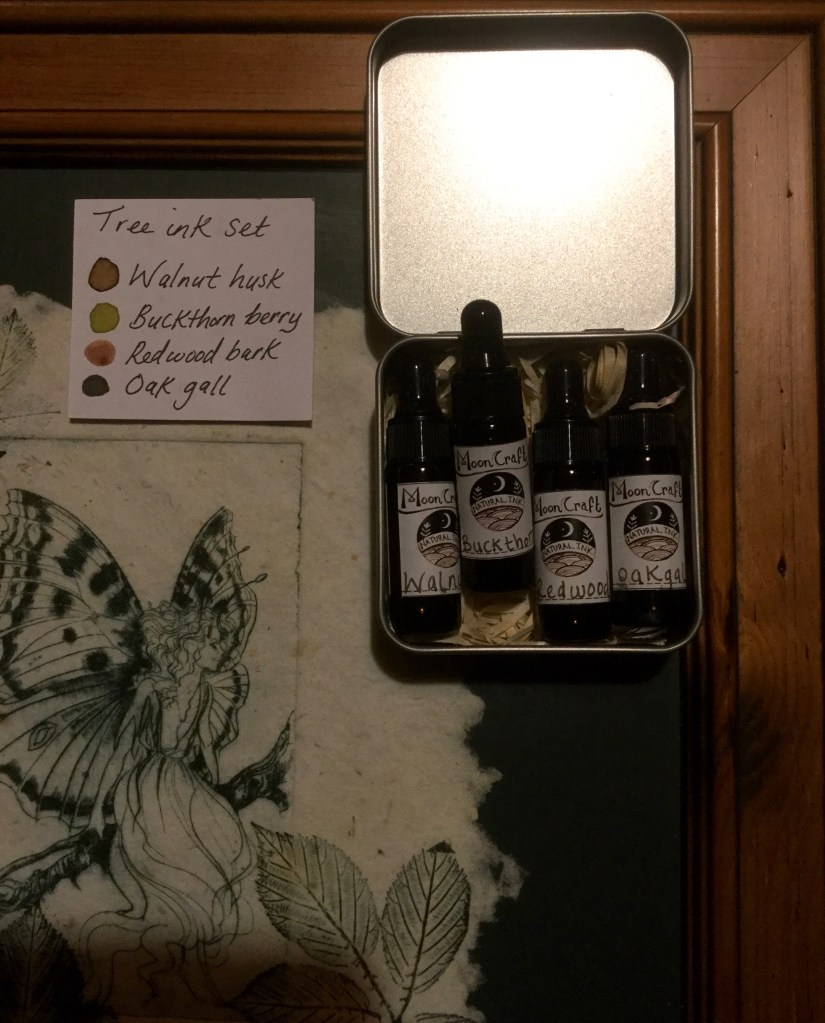
So a four pronged decision is now made concerning considerations. They should now be nailed to the Frail Autumn/Summers’ mast about to set sail. Music/photographs to marry with each of the songs’ lyrical imagery/hand written song titles and drawn doodles with tree inks and finally…rhythmically tapped out song lyrics on the old Olivetti typewriter.
Fun times should always exist in such undertakings.

 Gray Summers